FDA, 다발성 골수종 BCMA 표적항암제 승인
2021.04.16 · amschool
CAR T-세포 요법이라고 불리는 면역 요법의 한 종류는 현재 다발성 골수종 환자들에게 치료 선택지이다. 미국 식품의약국(FDA)은 3월 26일 최소 4건의 이전 암 치료 후 반응하지 않거나 재발한 다발성 골수종 환자를 대상으로 이데캡타진 바이클루셀(상표명 : 아베크마)을 승인했다.
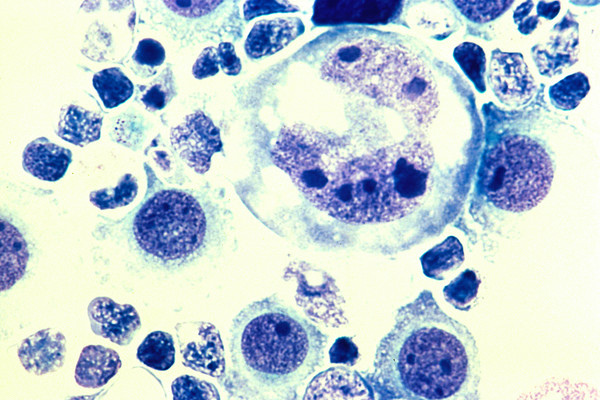
다발성 골수종이란 비정상적인 백혈구가 증가되어 뼈와 다른 부위에 종양을 형성할 때 발생하는 암의 일종이다. 다발성 골수종 치료법은 많지만, 일반적으로 몇 달만 효과가 있고, 많은 부작용을 일으킬 수 있다.
이 새로운 승인은 부분적으로는 이데캡타진 바이클루셀(이데-셀)이 환자의 72%의 종양을 부분적으로 또는 완전히 축소시킨 한 소규모 연구의 결과에 기초한다. 이러한 효과는 중위수 11개월 동안 지속되었다.
국립암연구소 암 연구 센터의 선임 연구원인 제임스 코헨더퍼 박사는 "매우 흥분된다. 이번 연구는 CAR T 세포가 다발성 골수종 치료에 효과적일 수 있다는 것을 보여준 국립암연구소 소속의 나의 팀의 이전 연구를 기반으로 한다"고 말했다.
"하지만 수적으로 극소수의 환자들이 이데-셀로 치유(완치)를 받기 때문에 아직 갈 길이 멀다. 따라서 우리는 다발성 골수종 환자들을 영구적으로 치유하기 위해 치료법을 개선하기 위한 연구를 계속할 필요가 있다"고 덧붙였다.
CAR T-세포 치료법을 만들기 위해 환자 자신의 T세포를 채취해 유전공학적으로 설계해 암세포를 보다 잘 보고 죽일 수 있도록 한 뒤 환자에게 되돌려준다. 이데-셀(ide-cell)을 통해, 유전자 공학을 통해, CAR T 세포는 여러 골수종 세포에 많은 양이 존재하는 단백질인 BCMA를 볼 수 있다. BCMA는 건강한 백혈구의 작은 부분집합에서 발견되지만 다른 건강한 세포에서는 발견되지 않는다.
다른 CAR T-세포 치료법과 마찬가지로, 이데-셀은 생명을 위협할 수 있는 과도한 면역 반응을 포함하여 심각한 부작용을 일으킬 수 있다. CAR T-세포 치료도 환자 한 명당 맞춤 제작으로 몇 주에서 한 달이 걸린다. 이러한 이유로, 이러한 치료는 일반적으로 더 큰 병원에서만 이용할 수 있다. 게다가, 그것들은 비쌀 수도 있다.
다발성 골수종에 관한 이데-셀의 영향
승인을 이끌어낸 연구에서 100명의 참가자는 단 한 번의 이데-셀 주입을 받았다. 환자의 절반 이상(60%)은 남성이고 78%는 백인이었다. 그들은 이전에 3종에서 16종의 다른 암 치료를 받았다. 이데-셀 제조사인 브리스톨 마이어스 스퀴브와 블루버드 바이오 사가 연구비를 지원했다.
이미 여러 가지 다른 치료를 받은 다발성 골수종 환자의 경우, 추가 치료는 일반적으로 3~4개월 동안 효과가 있으며 암을 완전히 제거하는 경우는 거의 없다.
전체 참여자 중 72명(72%)이 이데-셀에 응답했는데, 이 중 종양이 부분적으로 축소된 44명과 종양이 완전히 사라진 28명이 포함됐다. 종양이 완전히 사라진 사람들은 중위수 19개월 동안 관해에 들었다. 치료에 반응한 모든 참가자의 경우, 관해 기간은 11개월이었다.
코헨더퍼 박사는 "이러한 관해 과정 동안 환자들은 다른 어떤 다발성 골수종 치료도 받지 않아도 되고, 이로 인해 부작용도 피할 수 있고 삶의 질도 높다"고 지적했다. 그는 "환자가 관해 상태에 있다 해도 자주 복용하는 다발성 골수종 표준 치료와는 큰 차이가 있다"고 설명했다.
그는 "오랜만에 처음으로 많은 에너지를 가지고 있기 때문에 환자들은 보통 CART-세포 치료를 받은 후에 매우 행복해한다"고 말했다. 이 연구의 추가 결과는 2월 25일 뉴잉글랜드 의학 저널에 게재되었다.
이데셀의 부작용은 무엇인가?
거의 모든 시험 참가자(99%)가 심각한 부작용을 경험했다. 가장 흔한 부작용은 피로와 감염, 사이토카인 방출 증후군이었다.
승인에는 다음의 4가지 치료 관련 부작용에 대한 박스 경고(심각하거나 생명을 위협하는 위험의 경고)가 따른다.
▲ 사이토카인 방출 증후군
▲ 적혈구 포식성 림프조직구 증식증/대식세포 활성화 증후군(HLH/MAS)
▲ 뇌 관련 부작용(독성)
▲ 혈액 세포 수가 정상보다 적음(장기 세포 감소증)
CAR T-세포 치료는 면역체계를 강화시키기 때문에, 때로는 지나치면 사이토카인 방출증후군이나 HLH/MAS와 같은 위험한 과민반응을 일으킬 수 있다. 이런 증상은 심각하며 때로는 생명을 위협하지만, 증상이 조기 인지되어 치료를 하면 이런 합병증은 치료가 된다. 두 반응의 증상에는 고열, 저혈압, 독감 같은 증상이 있다.
다른 CAR T-세포 치료법과 마찬가지로 이데 셀도 혼란과 발작, 떨림, 언어 상실, 환각 등 뇌 관련 부작용을 일으켰다. 시험에 참가한 세 명의 환자는 뇌와 관련된 부작용이 사라지지 않았다.
|
부작용 |
반응도 (중간- 심함) |
심각한 반응 |
사망 |
|
사이토카인 방출 증후군 |
85% |
9% |
1 |
|
HLH/MAS |
4% |
4% |
2 |
|
뇌 관련 부작용 |
28% |
4% |
0 |
|
장기 혈소판 감소증 |
- |
49% |
0 |
|
장기 호중구 감소증 |
- |
41% |
0 |
FDA는 이러한 심각한 부작용을 인식하고 관리하도록 처방, 조제 또는 투여하는 직원에게 교육을 요구한다. FDA는 또한 직원들에게 최소한 4주 동안 이러한 부작용에 대해 환자를 관찰하고 즉시 중화제 치료를 받을 수 있도록 권고하고 있다.
NCI에서 이데-셀이 생기다
코헨더퍼 박사와 그의 NCI 동료들은 2013년에 다발성 골수종(multiple myeloma)을 위한 최초의 BCMA 표적 CAR T-세포를 설계하고 만들었다. 2년 후, 이 기술은 블루버드 바이오에 의해 허가되었고 국립암연구소와 블루버드 바이오, 브리스톨 마이어스 스퀴브 간의 협력 연구 협정에 따라 개발되었다.
"이데-셀(상표명 ; 아베크마) 치료를 받은 최초의 다섯 명의 환자들은 당시 bb2121로 불렸고, 국립암연구소I에서 치료를 받았다,"고 이 치료법의 첫 임상 연구를 이끈 코헨더퍼 박사는 말했다.
그는 어떤 표준 치료법에도 반응하지 않았던 많이 진행된 다발성 골수종 환자를 떠올렸다. 이데-셀을 사용한 치료 후, 환자는 39개월 동안 관해에 있었다.
"그것이 최선의 방법으로 효과가 있을 때 할 수 있는 것"이라고 그는 말했다.
코헨더퍼 박사와 그의 연구팀은 SLAMF7이라는 단백질을 표적으로 삼는 CAR T-세포를 포함한 다발성 골수종(CAT-cella)에 대한 CAR T-세포 치료법을 계속 개발하고 있으며, 다른 여러 CAR T-세포 치료법도 실타캡타진 오토류셀(실타-세포)이라고 알려진 또 다른 CAR T-세포를 포함한 다발성 골수종에 대해 개발 중에 있다.
다발성 골수종에 대한 또 다른 치료 옵션
FDA는 다발성 골수종 환자를 위한 또 다른 치료 옵션을 승인했다. 3월 31일, 이 기관은 카필조밉(상표명 : 키프롤리스)와 덱사메타손을 조합하여 이사툭시맙-irfc(상표명 : 사르클리사)를 승인했다. 이 승인은 1~3가지 다른 치료법으로 치료 후 재발하거나 낫지 않은 다발성 골수종 환자를 대상으로 한 것이다.
인가를 이끌어낸 시험에서는 이사툭시맙-irfc+카필조밉·덱사메타손이 카필조밉+덱사메타손에 비해 암이 악화되거나 사망할 위험을 45% 줄였다. 3가지 약물 조합의 가장 흔한 부작용은 감염과 주입 관련 부작용, 피로였다. 이사툭시맙-irfc는 일부 혈액 암 세포의 단백질인 CD38을 대상으로 하는 항체 치료제이다. 이 치료법은 이전에 2개 이상의 다른 다발성 골수종 치료제를 받은 사람들을 위해 포말리도미드(상표명 : 포말리스트)와 덱사메타손과 함께 승인되었다.
FDA Approves BCMA-Targeted CAR T-Cell Therapy for Multiple Myeloma
April 14, 2021, by NCI Staff
A type of immunotherapy called CAR T-cell therapy is now an option for some people with multiple myeloma. On March 26, the Food and Drug Administration (FDA) approved idecabtagene vicleucel (Abecma) for people with multiple myeloma that has not responded to or has returned after at least four different prior cancer treatments.
Multiple myeloma is a type of cancer that occurs when abnormal white blood cells build up and form tumors in the bones and other locations. Although there are many treatments for multiple myeloma, they typically work for only a few months and can cause many side effects.
The new approval is based, in part, on the results of a small study in which idecabtagene vicleucel (ide-cel) partially or completely shrank tumors in 72% of patients. These effects lasted for a median of 11 months.
“I’m very excited about this [approval]. This work builds on earlier work conducted by my group at NCI that showed CAR T cells could be an effective treatment for multiple myeloma,” said James Kochenderfer, M.D., a senior investigator in NCI’s Center for Cancer Research.
“However, we still have a long way to go because very few patients, if any, are cured [by ide-cel]. So we need to continue research to improve the treatment to try to permanently cure patients of multiple myeloma,” Dr. Kochenderfer added.
To make CAR T-cell therapies, a patient’s own T cells are collected, genetically engineered so they are better able to “see” and kill cancer cells, and then given back to the patient. With ide-cel, genetic engineering lets the CAR T cells “see” BCMA, a protein that’s present at high amounts in multiple myeloma cells. BCMA is found in a small subset of healthy white blood cells but not in other healthy cells.
Like other CAR T-cell therapies, ide-cel can have serious side effects, including overactive immune responses that can be life threatening. CAR T-cell therapy is also custom made for each patient, which takes a few weeks to a month. For that reason, these therapies are typically only available at bigger hospitals. In addition, they can be expensive. The list price for ide-cel, which consists of a single infusion, is $419,500. However, the cost to an individual will vary depending on their insurance plan.
Effects of Ide-cel on Multiple Myeloma
In the study that led to the approval, 100 participants received a single infusion of ide-cel. More than half of the patients (60%) were men and 78% were white. They had previously received between 3 and 16 different cancer treatments. Bristol Myers Squibb and bluebird bio, the manufacturers of ide-cel, funded the study.
For people with multiple myeloma who have already received several different treatments, additional therapies typically work for 3 to 4 months and rarely eliminate the cancer completely.
Overall, 72 participants (72%) responded to ide-cel, including 44 whose tumors partially shrunk and 28 whose tumors disappeared completely. People whose tumors disappeared completely stayed in remission for a median of 19 months. For all participants who responded to the treatment, the remission lasted a median of 11 months.
“During these remissions, patients do not need to take any other multiple myeloma therapy, which allows them to avoid [certain] side effects and to have a high quality of life,” Dr. Kochenderfer noted. That’s a big difference from standard multiple myeloma treatments, which patients often take even if they are in remission, he explained.
“Patients are usually very happy after they get the CAR T-cell therapy because, for the first time in a long time, they have a lot of energy,” he said.
Additional results from the study were published February 25 in New England Journal of Medicine.
What Are the Side Effects of Ide-cel?
Nearly all trial participants (99%) experienced a serious side effect. The most common side effects were fatigue, infections, and cytokine release syndrome.
The approval comes with a boxed warning (a notification of serious or life-threatening risks) for four treatment-related side effects:
• cytokine release syndrome
• hemophagocytic lymphohistiocytosis/macrophage activation syndrome (HLH/MAS)
• brain-related side effects (neurotoxicity)
• lower-than-normal number of blood cells (prolonged cytopenia)
Because CAR T-cell therapies boost the immune system, they can sometimes go too far, causing a dangerous overreaction like cytokine release syndrome or HLH/MAS. Although serious and potentially life threatening, these complications can usually be treated if the symptoms are recognized early. Symptoms of both reactions include high fever, low blood pressure, and flu-like symptoms.
Like other CAR T-cell therapies, ide-cel also caused brain-related side effects such as confusion, seizure, tremor, loss of speech, and delirium. Three patients in the trial had brain-related side effects that didn’t go away.
|
Side effects |
Any reaction (mild- deadly) |
Serious reaction |
Deaths |
|
Cytokine release syndrome |
85% |
9% |
1 |
|
HLH/MAS |
4% |
4% |
2 |
|
Brain-related side effects |
28% |
4% |
0 |
|
Prolonged thrombocytopenia |
- |
49% |
0 |
|
Prolonged neutropenia |
- |
41% |
0 |
FDA requires staff who prescribe, dispense, or administer ide-cel to be trained to recognize and manage these serious side effects. FDA also advises staff to monitor patients for these side effects for at least 4 weeks and to have counteractive treatments readily available.
Ide-cel’s Origins at NCI
Dr. Kochenderfer and his NCI colleagues designed and created the first BCMA-targeted CAR T cells for multiple myeloma in 2013. Two years later, the technology was licensed by bluebird bio and developed under a cooperative research agreement between NCI, bluebird bio, and Bristol Myers Squibb.
“The first five patients to receive Abecma, which was then called bb2121, were treated at NCI,” said Dr. Kochenderfer, who led the first clinical study of the treatmentExit Disclaimer.
He recalled one patient with very advanced multiple myeloma that hadn’t responded to any standard therapies. After treatment with ide-cel, the patient went into remission for 39 months.
“That’s what [the treatment] can do when it works at its best,” he said.
Dr. Kochenderfer and his team continue to develop and test CAR T-cell therapies for multiple myeloma, including CAR T cells that target a protein called SLAMF7. Several other CAR T-cell therapies are also in development for multiple myeloma, including another BCMA-targeted CAR T-cell therapy known as ciltacabtagene autoleucel (cilta-cel).
Another Treatment Option for Multiple Myeloma
FDA has approved another treatment option for patients with multiple myeloma. On March 31, the agency approved isatuximab-irfc (Sarclisa) in combination with carfilzomib (Kyprolis) and dexamethasone. The approval is for patients with multiple myeloma that came back or did not get better after treatment with one to three other therapies.
In the trial that led to the approval, isatuximab-irfc plus carfilzomib and dexamethasone reduced the risk of the cancer getting worse or death by 45%, compared with carfilzomib plus dexamethasone. The most common side effects of the three-drug combination were infection, infusion-related effects, and fatigue. Isatuximab-irfc is an antibody treatment that targets CD38, a protein on some blood cancer cells. The therapy was previously approved in combination with pomalidomide (Pomalyst) and dexamethasone for people who had received two or more other multiple myeloma therapies.
암스쿨에 게재된 기사는 미국국립암연구소(NCI), 미국암협회(ACS), 국립암센터(NCC), 일본국립암연구소(NCCJ), 엠디앤더슨암센터(MD Anderson Cancer Center) 등 검증된 기관의 검증된 자료를 토대로 작성되었습니다.
이 글은 2021년 4월 작성 시점의 정보입니다. 치료 기준·급여 정보는 바뀌었을 수 있으니, 진료와 치료 결정은 반드시 담당 의료진과 상의하세요.