[최신연구] 콜레스테롤을 낮추는 약이 면역항암제 효과 높인다는 연구결과 나와
2021.01.05 · 전영조 전문위원
면역 체크포인트(관문) 억제제는 잘 들으며 암이 진행된 사람들도 치료한다. 하지만 대부분의 환자들에게 이러한 면역 치료법은 단지 짧은 시간 동안만 효과가 있거나 전혀 효과가 없기도 하다. 이제 연구원들은 콜레스테롤을 낮추는 약이 이러한 성공률을 향상시킬 수 있는 방법을 제공할 수 있다는 증거를 가지고 있다.
듀크대학의 한 연구팀이 쥐를 대상으로 한 연구에서 두 가지 콜레스테롤을 낮추는 약이 스스로 종양의 성장을 둔화시키는 것을 발견하였다. 에볼로쿠맙(상표명 : 레파타)과 알리로쿠맙(상표명 : 프라루엔트)은 둘 다 콜레스테롤이 높은 사람들을 치료하는데 사용되고 있다.
"흥미로운 점은 이 약품들이 2015년부터 FDA 승인을 받았으며 전 세계 수천 명의 환자들에 의해 사용되었다는 것이다. 그리고 이 약들은 일반적으로 꽤 안전하다"고 추안 위안 리 수석 연구원(듀크대학 메디칼 센터)이 말했다.
환자들이 집에서 이 약을 먹을 수 있다는 것을 포함해 다른 장점들도 있을 수 있다. 이 약들은 또한 대부분의 암 치료제보다 비용이 덜 든다고 NCI의 암 연구 센터의 면역요법 그룹의 책임자인 제임스 걸리 박사는 말했다.
"이것은 암환자들의 이러한 조합요법을 관찰하기 위한 연구를 하는 가능성을 열어준다"고 걸리 박사는 덧붙였다. 리 박사와 그의 동료들은 그 약의 조합에 대한 임상 연구가 진행되기를 바라고 있다.
에볼로쿠맙과 알리로쿠맙은 두 가지 다 LDL 콜레스테롤이라고도 불리는 나쁜 콜레스테롤 수치를 조절하는 효소인 PCSK9의 작용을 차단한다. 하지만 연구원들은 이 약이 종양에 미치는 영향은 콜레스테롤과는 아무런 관련이 없다는 것을 발견했다. 대신에 PCSK9를 차단함으로써 암세포가 암과 싸우는 면역세포에 더 잘 보이게 되었다. 국립암연구소(NCI)가 후원한 연구에서 얻은 이 연구 결과는 11월 11일 네이처지에 발표되었다.
연구원들은 여전히 암에서 PCSK9의 역할을 연구하고 있다. 리 박사는 이 단백질이 건강한 세포에서 여러 가지 기능을 하기 때문에 암세포에서도 다른 역할을 할 수 있다고 말했다.
"우리는 이 이야기에 더 많은 것이 있다고 생각한다"고 그는 덧붙였다. 연구팀은 현재 PCSK9가 부족한 암세포에서 어떤 유전자와 단백질의 변화가 일어나는지 알아보기 위해 실험을 하고 있다.
PCSK9가 없으면 종양 성장 속도가 느려진다
리 박사의 팀은 우연히 PCSK9과 마주쳤다. 그들은 암을 죽이는 면역세포의 활동과 콜레스테롤을 조절하는 효소를 연관시키는 연구를 우연히 발견했었다.
"우리는 아마도 다른 콜레스테롤 조절 효소를 조사할 수 있을 거라고 생각했다"고 리 박사는 회상했다. 동시에 그는 PCSK9 없이 태어난 사람들은 콜레스테롤 수치가 매우 낮으며 심장병으로부터 보호받고 있다는 것을 알아냈다.
그래서 연구팀은 PCSK9가 암에서 역할을 하는지 조사하기로 결정했다. 실험실 실험에서(효소에 대한 유전자를 삭제함으로써) PCSK9가 부족하도록 설계된 암세포가 PCSK9가 있는 암세포와 같은 비율로 성장했다는 것을 발견했다.
그러나 이 세포들이 쥐에게 이식되었을 때 이 PCSK9가 없는 암세포는 PCSK9DL 있는 암세포보다 휠씬 느리게 성장하였다. 게다가 PCSK9 억제제인 에볼로쿠맙과 알리로쿠맙은 둘 다 쥐의 대장암의 성장을 둔화시켰다.
PCSK9는 콜레스테롤을 붙잡아 안에 넣는 발톱 모양의 단백질인 콜레스테롤 수용체가 간세포 표면에 얼마나 많이 붙어 있는지를 조절함으로써 혈중 콜레스테롤 수치에 영향을 미친다. PCSK9를 차단하면 세포 표면에 더 많은 콜레스테롤 수용체가 생기고 그 결과 혈중 콜레스테롤이 줄어든다.
연구팀은 PCSK9를 삭제제거하거나 차단하는 암 억제 효과가 콜레스테롤과 관련이 있다고 의심했다. 하지만 놀랍게도 그것은 사실이 아닌 것 같았다. 그들이 피부암 세포에서 콜레스테롤 수용체 유전자를 제거했을 때 그것은 그들의 성장을 전혀 늦추지 않았다. 같은 세포에서 PCSK9 유전자를 제거하는 효과와는 전혀 다른 것이었다.
면역 체크포인트 억제제의 효과 개선
PCSK9는 콜레스테롤 수용체에 대한 영향력으로 가장 잘 알려져 있지만, 면역 반응에 관여하는 일부 수용체를 포함하여 세포에 대한 다른 수용체들의 수치도 조절한다. 이와 함께 리 박사의 연구팀은 PCSK9가 제거된 암세포를 쥐에 투여하는 것이 종양성장을 둔화시키는 면역반응을 촉발한다는 것을 발견했다.
더욱이 면역 체크포인트 억제제로 면역체계를 강화하면 PCSK9가 제거된 종양의 성장이 더욱 느려졌다. 일부 실험에서 면역 체크포인트 억제제를 사용한 치료는 PCSK9가 제거된 종양의 성장을 거의 완전히 중단시켰다.
마찬가지로 에볼로쿠맙 또는 알리로쿠맙과 면역 체크포인트 억제제의 결합은 PCSK9를 가진 종양의 성장을 어떤 약물보다 더 느리게 했다. 그 조합으로 치료한 쥐도 더 오래 살았다.
면역체계가 암을 볼 수 있도록 도와주기
다음으로 연구원들은 PCSK9가 없는 종양과 면역체계가 어떻게 상호작용하는지 탐구했다. 세포 표면의 수용체를 조절하는 효소의 역할을 고려하여 그들은 거기에 초점을 맞췄다.
면역세포가 암세포를 죽이기 전에 그들은 먼저 암세포를 찾아야 한다. 세포 표면에 MHC I을 스캔하여 세포 안에서 무슨 일이 일어나는지 본다. 암세포의 경우 MHC 단백질은 종종 세포가 비정상적이며 제거되어야 한다는 것을 보여준다.
"T세포가 종양세포에서 무슨 일이 일어나고 있는지 알 수 있는 유일한 방법은 MHC 분자를 통해서이다. 이것은 절대적으로 중요하다"고 걸리 박사는 설명했다.
연구원들은 PCSK9가 암세포 표면에 얼마나 많은 MHC I이 있는가에 영향을 미친다는 것을 발견했다. PCSK9를 제거하거나 진화하는 것을 막으면 피부와 유방암 세포 표면에 있는 MHC I의 양이 상당히 증가하였다. 또한 PCSK9가 삭제된 종양에는 PCSK9가 있는 종양보다 T세포를 포함한 암을 유발하는 면역세포가 더 많이 들어 있었다.
"만약 더 많은 MHC가 있다면 T세포는 종양의 상태를 더 명확하게 조사할 수 있다. 그리고 면역체계가 더 잘 기능할 수 있기 때문에 면역요법이 더 효과적일 것" 이라고 걸리 박사가 말했다.
반면, 연구는 면역요법이 MHC 유전자의 돌연변이를 가진 종양이나 T세포가 암세포를 볼 수 있도록 돕는 다른 유전자에 잘 작용하지 않는다는 것을 보여주었다. 다른 과학자들은 방사선이나 시토카인이라고 불리는 면역신호분자와 같은 종양에서 MHC 수치를 증가시키기 위한 전략을 연구하고 있다고 걸리 박사는 말했다.
2020년 12월 10일 국립암연구소 제공
Could Cholesterol-Lowering Drugs Improve Cancer Immunotherapy?
December 10, 2020, by NCI Staff
Immune checkpoint inhibitors work well, and even cure, some people with advanced cancer. But for most patients, these immunotherapies work only for a short time or not at all. Now researchers have evidence that cholesterol-lowering drugs might offer a way to improve those success rates.
In studies of mice, two cholesterol-lowering drugs slowed the growth of tumors on their own and when combined with an immune checkpoint inhibitor, a team from Duke University has found. Both drugs, evolocumab (Repatha) and alirocumab (Praluent), are used to treat some people with high cholesterol.
“The exciting part is these drugs have been [FDA] approved since 2015 and have been used by thousands of patients around the world,” said lead investigator Chuan-Yuan Li, D.Sc., of Duke University Medical Center. “They’re generally pretty safe,” Dr. Li said.
There may be other advantages, too, including that patients can take the medicines at home. The drugs are also less expensive than most cancer treatments, noted James Gulley, M.D., Ph.D., head of the immunotherapy group in NCI’s Center for Cancer Research.
“It opens up the possibility of doing a study to look at this combination” in people with cancer, Dr. Gulley added. Dr. Li and his colleagues are hoping to get a clinical study of the drug combination off the ground.
Both evolocumab and alirocumab block the activity of PCSK9, an enzyme that controls levels of “bad” cholesterol, also called LDL cholesterol. But the researchers found that the drugs’ effects on tumors had nothing to do with cholesterol. Instead, blocking PCSK9 made cancer cells more visible to cancer-fighting immune cells. Findings from the NCI-funded study were published November 11 in Nature.
The researchers are still exploring PCSK9’s role in cancer. The protein has multiple functions in healthy cells, Dr. Li said, so it may have other roles in cancer cells, too.
“We think there’s more to the story,” he added. The team is now doing experiments to see what other gene and protein changes occur in cancer cells lacking PCSK9.
Without PCSK9, Tumors Grow Slower
Dr. Li’s team stumbled into PCSK9 by chance. They had come across a study linking the activity of cancer-killing immune cells to an enzyme that regulates cholesterol.
“We thought, maybe we can investigate other cholesterol-regulating enzymes,” Dr. Li recalled. Around the same time, he learned that people who are born without PCSK9 have very low cholesterol levels and are protected from heart disease.
So, the team decided to look into whether PCSK9 plays a role in cancer. In lab experiments, cancer cells engineered to lack PCSK9 (by deleting the gene for the enzyme) grew at the same rate as cancer cells with PCSK9, the researchers found.
But when these cells were implanted into mice, they grew much
slower than cancer cells with PCSK9. In addition, the PCSK9 inhibitors evolocumab and alirocumab both slowed the growth of colon tumors in mice.
PCSK9 affects blood cholesterol levels by controlling how much cholesterol receptor—a claw-like protein that grabs onto cholesterol and brings it inside—sits on the surface of liver cells. Blocking PCSK9 leads to more cholesterol receptors on cell surfaces and, in turn, less cholesterol in the blood.
The team suspected that the cancer-slowing effects of deleting or blocking PCSK9 had something to do with cholesterol. But, to their surprise, that didn’t appear to be the case. When they deleted the gene for the cholesterol receptor in skin cancer cells, it didn’t slow their growth down at all—nothing like the effects of deleting the gene for PCSK9 in those same cells.
Improving the Effects of Immune Checkpoint Inhibitors
Although PCSK9 is best known for its influence on the cholesterol receptor, it also controls the levels of other receptors on cells, including some that are involved in immune responses.
In line with that, Dr. Li’s group found that putting PCSK9-deleted cancer cells into mice triggered an immune response that slowed tumor growth.
What’s more, boosting the immune system with an immune checkpoint inhibitor slowed the growth of PCSK9-deleted tumors even further. In some experiments, treatment with an immune checkpoint inhibitor almost completely stopped the growth of PCSK9-deleted tumors.
Likewise, the combination of evolocumab or alirocumab plus an immune checkpoint inhibitor slowed the growth of tumors with PCSK9 more than any of the drugs alone. Mice treated with the combination also lived longer.
Helping the Immune System See Cancer
Next, the researchers explored how the immune system interacts with tumors lacking PCSK9. Given the enzyme’s role in regulating cell surface receptors, they focused there.
Before immune cells can kill cancer cells, they first have to find them. They do so by scanning the cell surface for MHC I, a protein that essentially shows what’s happening inside that cell. For cancer cells, MHC proteins often show that the cells are abnormal and should be removed.
“The only way a T cell can see what’s going on in a tumor cell is through the MHC molecule. It’s absolutely critical,” Dr. Gulley explained.
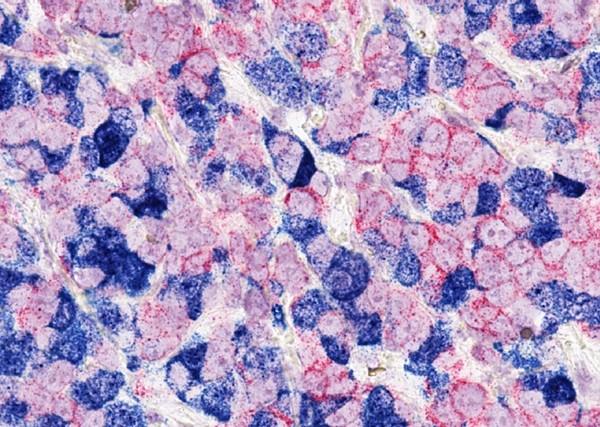
The researchers found that PCSK9 affects how much MHC I sits on the surface of cancer cells. Deleting PCSK9 or blocking its activity with evolocumab substantially raised the amount of MHC I on the surfaces of skin and breast cancer cells. In addition, PCSK9-deleted tumors contained more cancer-killing immune cells, including T cells, than tumors with PCSK9.
“If more [MHC] is around, T cells can interrogate more clearly what’s going on in the tumor. And immunotherapy is going to work better because the immune system can function better,” Dr. Gulley said.
On the other side of the coin, research has shown that immunotherapy doesn't work well against tumors with mutations in MHC genes or other genes that help T cells see cancer cells. Other scientists are working on strategies to increase MHC levels in tumors, such as with radiation or immune-signaling molecules called cytokines, noted Dr. Gulley.
암스쿨에 게재된 기사는 미국국립암연구소(NCI), 미국암협회(ACS), 국립암센터(NCC), 일본국립암연구소(NCCJ), 엠디앤더슨암센터(MD Anderson Cancer Center) 등 검증된 기관의 검증된 자료를 토대로 작성되었습니다.
이 글은 2021년 1월 작성 시점의 정보입니다. 치료 기준·급여 정보는 바뀌었을 수 있으니, 진료와 치료 결정은 반드시 담당 의료진과 상의하세요.