연구를 통해 미세부수체 고도 불안정 암치료의 아이디어가 더욱 강화된다
2020.10.08 · 전영조 전문위원

국립암연구소 연구원들이 주도한 연구는 WRN이라는 효소를 대상으로 하는 것이 특정 암을 치료하는 새로운 방법이 될 수 있다는 최근의 생각을 굳혀준다. 기존의 어떤 약품도 특별히 효소를 표적으로 하는 것으로 알려져 있지 않지만, 국립암연구소 팀은 물론 몇몇 제약회사들도 효소를 찾고 있다.
지난해 과학자들은 미세 부수체 불안정-하이(MSI-하이)라는 유전적 특징을 가진 암세포가 생존하기 위해서는 WRN이 필요하다는 사실을 밝혀냈다. WRN을 제거함으로써 MSI-하이 암세포는 죽었지만 건강한 세포는 죽임을 당하지 않아 잠재적인 새로운 치료방법에 대한 흥분을 감추지 못했다.
자궁내막 암 3건 중 1건, 대장암, 위암, 난소암 7건 중 1건이 MSI-하이이다. 그것은 암의 위험을 증가시키는 유전적 장애인 린치 증후군을 가진 사람들에게서 발병하는 종양의 특징이다. 특정 검사를 통해 사람의 암이 MSI-하이인지 여부를 판단할 수 있다.
이번 연구에 참여하지 않은 터프츠 대학의 세르게이 머킨 박사는 MSI 하이 암세포가 왜 WRN에 그렇게 많이 의존하고 있는지에 대한 큰 문제를 다루고 있다고 말했다.
WRN은 다른 암세포보다 MSI-하이 암세포에서 더 자주 발생하는 특이한 DNA 구조를 풀어준다는 것을 국립암연구소 연구진이 발견했다. WRN이 부족한 MSI-하이 암세포에서 이 구조는 결국 DNA를 산산조각 내고 세포는 마침내 죽고 만다.
국립암연구소 암 연구 센터의 선임 연구원인 안드레 누센즈베이그 박사는 9월 30일 ‘네이처’ 지에 발표된 이번 연구 결과는 암 연구자들이 미세 부수체 불안정성에 대한 인식을 바꿀 수 있다고 말했다. 몇몇 다른 기관의 연구자들도 이 연구에 협력했다.
※미세 부수체 고 불안정(성) 암 : 미세 부수체 내에서 돌연변이(변화)가 많은 암세포를 설명한다. 예를 들어, 30% 이상의 미세 부수체에서 돌연변이를 보이는 시험을 미세 부수체 고 불안정 암이라고 부른다. 이 미세 부수체들은 DNA가 짧고 반복적인 배열이다. 미세 부수체 고 불안정 암세포는 세포 안에서 DNA가 복사될 때 발생하는 실수를 바로잡을 수 있는 능력에 결함이 있을 수 있다. 미세 부수체 불안정(성)은 대장암, 위암, 자궁내막 암에서 가장 많이 발견되지만, 다른 많은 종류의 암에서도 발견될 수 있다. 암이 미세 부수체 불안정성이 높은지를 아는 것은 최상의 치료 계획을 세우는 데 도움이 될 수 있다. MSI-H 암이라고도 한다.
MSI-하이 암의 DNA 파괴
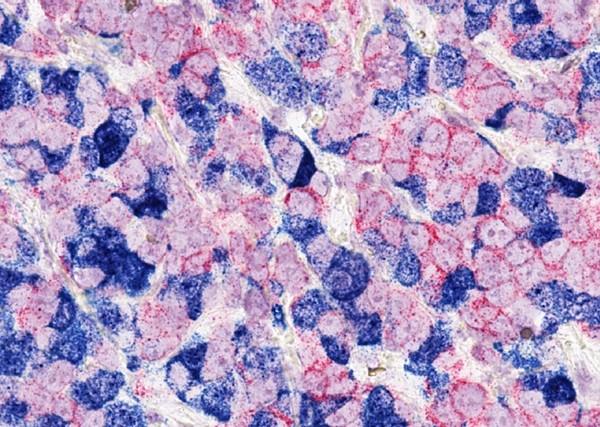
“망가진 DNA!” 이 연구의 수석 연구원인 니크 반 비이트마아센 박사가 WRN이 부족하도록 조작한 MSI-하이 대장암의 암세포를 현미경을 통해 들여다보았을 때 몇 번이고 놀라움을 느낀 말이다.
"세포의 40%에서 염색체들은 먼지처럼 보인다. 마치 폭탄이 터진 것 같다."라고 비이트마아센 박사가 말했다.
그와 그의 동료들은 다른 것도 알아차렸다. 이 파괴는 게놈의 동일한 부위에서 발생했으며 심지어 다른 종류의 연구실에서 배양된 대장암 세포에서도 발생했다. 거의 모든 파괴는 동일한 두 개의 DNA 문자, 즉 염기서열의 긴 연속에 가까웠다. T와 A라는 글자는 마치 DNA에 말 더듬이의 말처럼 앞뒤로 반복되고 있다.
연속적 T와 A의 반복은 MSI가 없는 건강한 세포와 암세포에서도 발견된다. 그러나 MSI high의 암세포에서는 많은 T와 A 반복이 정상보다 훨씬 길었다. 일부는 수백 배나 확장되었다. 누센츠바이그 박사는 "그런 건 처음 본다"고 말했다.
사실, 전에는 그런 것을 본 사람이 거의 없다고 미르킨 박사는 말했다. 그것은 DNA를 읽는 표준적인 방법, 즉 염기서열은 길고 반복적인 염기서열이 있는 부분을 건너뛰기 때문이라고 그는 설명했다. 하지만 새로운 기술로 과학자들은 마침내 DNA의 이러한 이해하기 어려운 부분을 읽을 수 있다.
미르킨 박사는 "표준 염기서열 분석법으로는 너무 많은 중요한 [DNA] 요소를 빠뜨리고 있다는 것이 명백해지고 있다"고 덧붙였다. 연구자들이 결국 새로운 기술을 사용하는 쪽으로 전환함에 따라 DNA의 더 많은 특징들이 발견될 것 같다고 그는 말했다. 그러나 현재 이 신기술은 소수의 대형 연구기관에서만 이용할 수 있다.
특이한 DNA 구조를 풀어낸 WRN
다음으로, 이 팀은 긴 TA 반복이 왜 더 깨질 가능성이 높은지를 탐구했다. 연구자들은 TA 반복실험에 대한 이전의 연구에 기초하여, 이 부분들에서 DNA의 형태나 구조와 관련이 있다고 추측했다.
DNA는 보통 사다리와 같은 모양을 하고 있으며, 두 면을 연결한다. 보통 사다리의 반대편에 있는 T들과 A들이 서로 연결되어 사다리의 가름대를 형성한다.
그러나 같은 쪽의 사다리에 T들과 A들이 뭉쳐 있으면 서로 잘못 연결돼 꼬인 DNA라고 하는 X자 모양의 구조를 형성할 수 있다고 미르킨 박사는 설명했다. 30여 년 전, 그는 TA가 이러한 구조물들을 쉽게 형성한다는 것을 발견했다.
MSI-하이의 암세포에서 긴 TA 반복이 실제로 고인 DNA를 형성했다는 것을 국립연구소 연구진이 발견했다. 그리고 WRN이 들어오는 곳이기도 하다. 이 효소의 일은 DNA가 복제될 수 있도록 이러한 구조를 푸는 것이다.
누센츠바이그 박사는 "구조물이 가지런해지지 않으면 DNA가 복제되지 않고 결국 세포가 죽게 된다"고 말했다.
연구진은 WRN이 MSI-하이 암세포에서 꼬인 DNA를 풀었다고 밝혔다. 그러나 WRN이 없는 MSI-하이 암세포에서는 다른 효소들이 구조물을 제거하기 위해 최후의 노력으로 이상하게 생긴 DNA를 절단한다.
세포는 일반적으로 한 두 개의 DNA가 절단되어도 회복될 수 있다. 그러나 WRN이 부족한 MSI-하이 암세포에서는 너무 많은 DNA의 절단이 생겨서 염색체가 산산조각 나고 세포가 죽는다고 미르킨 박사는 설명했다.
MSI-high 암에 대한 새로운 치료 아이디어
누센즈바이그 박사는 "MSI-하이 암을 치료하기 위해 WRN을 차단하는 약을 개발하는 것은 흥미로운 전망"이라고 말했다.
그것은 WRN을 차단하는 것이 건강한 세포에는 큰 영향을 미칠 것 같지는 않지만, "미세 부수체 불안정 세포에서는 독성이 매우 크기 때문"이라고 그는 말했다. 기존의 결함으로 인해 암세포가 특히 특정 치료에 특히 취약하게 되는 그런 관계를 합성 치사율이라고 한다. 그것은 특히 암 치료 접근법에서 많이 추구한다. 왜냐하면 그것은 건강한 세포를 확보함으로써 부작용을 적게 일으킬 수 있기 때문이다.
그러나 머킨 박사는 WRN을 차단하는 것에 대해 몇 가지 우려를 제기했다. WRN 효소 없이 태어난 베르너 증후군을 가진 사람들은 장애가 없는 사람들보다 발병 나이가 훨씬 빠르고 암 발병 위험이 높다고 그는 지적했다. 그리고 고여진 DNA는 건강한 세포에서도 발생할 수 있기 때문에, WRN 역시 거기에 필요하다. 그러나 암 치료는 항상 유익성과 위해성의 균형을 잡는 것이라고 그는 말했다.
"우리의 연구 결과는 비록 그러한 치료의 가능성이 먼 장래에 있을 지라도 WRN 차단 약물로 치료함으로써 효험을 얻을 수 있는 환자들을 확인할 수 있는 방법을 제공할 수 있을 것"이라고 누센즈바이그 박사는 말했다.
긴 TA 반복은 같은 지점에서 발생하기 때문에, 심지어 다른 암에서도 발생하기 때문에, 연구자들은 이 반복이 어떤 사람의 암이 WRN에 의존하고 있는지 여부를 판별하는 마커(표지자)일 수도 있다고 말한다, 따라서 WRN 차단 약물로 치료하면 효험을 볼 수 있다고 말한다.
과학자들은 현재 환자의 종양에서 긴 TA 반복을 발견하기 위한 간단한 테스트를 개발하기 위해 노력하고 있다.
|
미세 부수체 불안정의 정의의 수정 과학자들은 현재 미세 부수체 불안정을 DNA 문자의 한두 개 추가나 삭제와 같은 DNA의 작은 변화로 정의하고 있다. 그러나 이번 연구 결과, 정의가 더 정교해질 필요가 있음을 시사한다고 누센즈바이그 박사는 말했다. 긴 TA의 결과인 DNA의 큰 확장은 미세 부수체 불안정의 특징으로 여겨지는 DNA의 작은 변화와는 매우 다르다고 그는 지적했다. 심지어 두 종류의 미세 부수체 불안정도 있을 수 있다고 그는 추측했다. 하나는 DNA의 작은 변화로, 다른 하나는 DNA의 큰 확장으로 특징지어진다. |
2020년 10월 2일 : 국립암연구소 제공
Study Reinforces Treatment Idea for Cancer with Microsatellite Instability
October 2, 2020, by NCI Staff
A study led by NCI researchers reinforces a recent idea that targeting an enzyme called WRN may be a new way to treat certain cancers. No existing drugs are known to specifically target the enzyme, but the NCI team—as well as several drug companies—are searching for one.
Last year, scientists discovered that cancer cells with a genetic feature called microsatellite instability-high (MSI-high) need WRN to survive. Getting rid of WRN killed MSI-high cancer cells but not healthy cells—sparking excitement about a potential new treatment approach.
Around 1 in 3 endometrial cancers, and 1 in 7 colorectal, stomach, and ovarian cancers, are MSI-high. It’s a hallmark feature of tumors that develop in people who have Lynch syndrome, a hereditary disorder that increases the risk of cancer. Specific tests can determine whether a person's cancer is MSI-high.
The new study addresses the big question of why MSI-high cancer cells depend so heavily on WRN, said Sergei Mirkin, Ph.D., of Tufts University, who wasn’t involved in the study.
WRN unwinds unusual DNA structures that occur more frequently in MSI-high cancer cells than in other cancer cells, the NCI researchers found. In MSI-high cancer cells that lacked WRN, the structures eventually cause the DNA to shatter and the to cells dieExit Disclaimer.
The findings, published September 30 in Nature, may change how cancer researchers think about microsatellite instability, said the study’s senior researcher, André Nussenzweig, Ph.D., of NCI’s Center for Cancer Research. Researchers from several other institutions also collaborated on the study.
DNA Breaks in MSI-High Cancer
Broken DNA. That’s what Niek van Wietmarschen, Ph.D., the study’s lead researcher, was awed by over and over again when he looked through the microscope at MSI-high colorectal cancer cells that were engineered to lack WRN.
“In 40% of the cells, the chromosomes look like dust,” Dr. van Wietmarschen said. “It’s like a bomb went off.”
He and his colleagues also noticed something else: The breaks occurred in the same areas in the genome, even in different kinds of lab-grown colorectal cancer cells. Nearly all of the breaks were near a long series of the same two DNA letters, or bases. The letters, T and A, were repeated back-to-back, as if there was a stutter in the DNA.
Repeats of back-to-back Ts and As are found in healthy cells and cancer cells without MSI, too. But in MSI-high cancer cells, many TA repeats were much longer than normal. Some were expanded several hundred times.
“I’d never seen anything like that before,” Dr. Nussenzweig said.
In fact, very few people have seen that before, Dr. Mirkin said. That’s because the standard way to read, or sequence, DNA skips over sections with long, repetitive sequences, he explained. But with new technologies, scientists can finally read these elusive sections of DNA.
“It’s becoming clear that [we] are missing too many important [DNA] elements” with the standard way of sequencing, Dr. Mirkin added. As researchers eventually shift to using the newer technologies, more features of DNA are likely to be discovered, he said. But at the moment, the new technologies are only available at a handful of large research institutions.
WRN Unravels Unusual DNA Structures
Next, the team explored why long TA repeats are more likely to break. Based on earlier studies of TA repeats, the researchers suspected it had something to do with the shape, or structure, of DNA in these sections.
DNA is usually shaped like a ladder, with rungs connecting two sides. Normally, Ts and As on the opposite sides of the ladder link up, forming the rungs.
But if there are a bunch of Ts and As next to one another on the same side of the ladder, they can mistakenly connect with each other, forming an X-shaped structure called a DNA cruciform, Dr. Mirkin explained. More than 3 decades ago, he discovered that TA repeats readily form these structures.
In MSI-high cancer cells, long TA repeats did indeed form DNA cruciforms, the NCI researchers found. And that’s where WRN comes in. The enzyme’s job is to untangle these structures so that the DNA can get copied.
A piece of DNA with a small yellow section. An arrow points to another piece of DNA with a larger yellow section. Another arrow points to a third piece of DNA with the yellow portion forming an X-shape.
In MSI-high cancer cells, back-to-back repeats of certain DNA bases (TA repeats) are longer than normal (expanded TA repeat). These DNA sections often form an usual X-shaped structure called a DNA cruciform.
Credit: Elsa Callen, Ph.D.
“If the structures aren’t teased out, DNA can’t get copied and the cell will eventually die,” Dr. Nussenzweig said.
WRN unwound DNA cruciforms in MSI-high cancer cells, the researchers showed. But in MSI-high cancer cells without WRN, other enzymes cut the DNA in a last-ditch effort to get rid of the structures.
Cells can typically recover from one or two DNA cuts. But in the MSI-high cancer cells lacking WRN, so many DNA cuts are made that chromosomes shatter and the cells die, Dr. Mirkin explained.
A New Treatment Idea for MSI-High Cancer
“Developing drugs that block WRN to treat MSI-high cancer is an exciting prospect,” Dr. Nussenzweig said.
That’s because while blocking WRN is unlikely to have much of an effect on healthy cells, “it’s super toxic in microsatellite unstable cells,” he said. That kind of relationship—where an existing defect makes the cancer cells especially susceptible to a specific treatment—is called synthetic lethality. It is especially sought out in cancer treatment approaches because it may cause fewer side effects by sparing healthy cells.
But Dr. Mirkin raised some concerns about blocking WRN. People with Werner syndrome, who are born without the WRN enzyme, age much faster and have a higher risk of cancer than people without the disorder, he pointed out. And DNA cruciforms can occur in healthy cells, so WRN is needed there, too. But cancer treatment is always a balance of benefits and harms, he said.
“Our findings may also provide a way to identify patients who might benefit from treatment with WRN-blocking drugs—even if the prospect of such a treatment is a long way down the road,” Dr. Nussenzweig said.
Because the elongated TA repeats occur in the same spots, even in different cancers, the researchers say they could be a sort of marker to tell if a person’s cancer is dependent on WRN—and may therefore benefit from treatment with a WRN-blocking drug.
The scientists are now working on developing a simple test for finding elongated TA repeats in patients’ tumors.
Tweaking the Definition of Microsatellite Instability
Scientists currently define microsatellite instability as an abundance of small DNA changes, like the addition or deletion of one or two DNA letters.
But the study findings suggest that definition may need to be refined, Dr. Nussenzweig said. The large DNA expansions—a result of the long TA repeats—that they observed are very different from the small DNA changes that are considered the hallmark of microsatellite instability, he noted.
There may even be two different kinds of microsatellite instability, he speculated, one marked by small DNA changes and the other by large DNA expansions.
암스쿨에 게재된 기사는 미국국립암연구소(NCI), 미국암협회(ACS), 국립암센터(NCC), 일본국립암연구소(NCCJ), 엠디앤더슨암센터(MD Anderson Cancer Center) 등 검증된 기관의 검증된 자료를 토대로 작성되었습니다.
이 글은 2020년 10월 작성 시점의 정보입니다. 치료 기준·급여 정보는 바뀌었을 수 있으니, 진료와 치료 결정은 반드시 담당 의료진과 상의하세요.