포상연부육종에 효과적인 면역요법
2020.09.15 · 전영조 전문위원
포상연부육종에 효과적인 면역요법
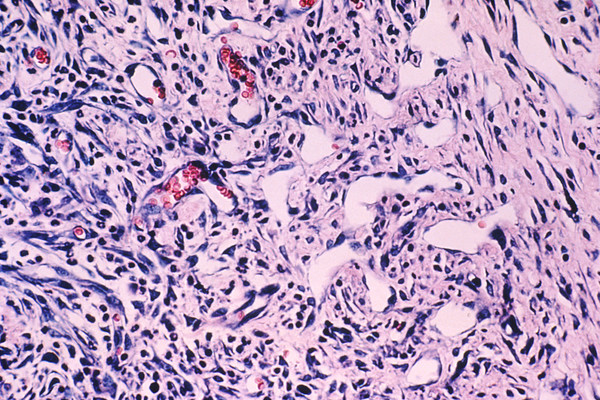
※포상연부육종, 일명 봉와성연부육종(蜂窩性軟部肉腫) : 상피세포와 유사하고 봉와상 결합조직으로 둘러싸인 육종세포군을 둘러싼 세망상의 섬유성 간질을 가진 육종.
한 소형 임상시험에 의하면, 희귀 암인 치조부 연부육종(ASPS)이 진행된 사람들은 면역체크포인트 억제제라 불리는 일종의 면역요법의 혜택을 받는 것으로 나타났다.
과거에 포상연부육종에 걸렸던 사람들에게 테스트를 했던 치료법은 거의 효과가 없었다. 그 예외는 소라페니브(상표명 : 넥사바르)와 세디라닙(상표명 : 레센틴)을 포함하는 티로신키나아제 억제제(TKIs)라고 불리는 약의 종류였다. 일부 환자의 종양은 이러한 약물로 치료를 받으면 줄어들지만, 대부분의 암은 결국 치료에 대한 반응을 멈춘다.
새로운 국립암연구소(NCI) 주도의 실험에서는 체크포인트 억제제인 아테졸리주맙(상표명 ; 테센트리크)을 이용한 치료에 따라 종양이 위축되거나 성장이 멈췄다.
이 연구에 관여하지는 않았지만 미시간 대학의 육종 치료 전문인 스콧 슈에체 박사는 "육종이 전이된 환자들의 경우, 이제 항암 작용을 하는 완전히 새로운 종류의 약물이 나올지도 모른다는 사실이 흥분된다."고 말했다.
이 실험결과는 11월 16일 결합조직 종양학회(CTOS)의 2018년 연차총회에서 발표되었다.
한창 때의 사람들에게 달려드는 육종
포상연부육종(ASPS)은 극히 드물며, 미국에서는 매년 100명 미만의 환자만이 진단을 받는다. 근육이나 지방과 같은 연한 조직 세포에서 시작한다. 슈에체 박사는 대부분의 다른 암과 달리 주로 20대, 30대, 40대 여성과 남성 등 젊은 층에게 영향을 준다고 설명했다.
"그것은 그들의 전성기에 있는 사람들을 노리는 경향이 있습니다. 이 병은 분명히 건강뿐만 아니라 사람들이 경력을 쌓고 가정을 꾸리는 능력에도 큰 영향을 끼친다."고 슈에체 박사는 말한다.
포상연부육종(ASPS)의 주된 치료법은 수술이며, 때로는 방사선 치료와 결합되기도 한다. 그러나 ASPS는 보통 그 초기에 신체의 다른 부분으로 퍼진다. 폐나 뇌에서 가장 많이 발견되는 전이성 ASPS 종양은 성장 속도가 느리지만 결국 증상을 일으키기 시작한다. 전이성 ASPS는 항상 치명적이라고 국립암연구소 암 치료 및 진단 부(DCTD)의 발달 치료학 클리닉 책임자인 앨리스 첸 박사가 말했다.
화학요법은 전이성 ASPS 환자에겐 효과적이지 않다. 그러나 지난 10년 동안 작은 연구들은 티로신키나제 억제제(TKI)가 때때로 전이성 질환의 성장을 늦출 수 있다는 것을 보여주었다. TKI 일종인 파조파니브(상표명 : 보트리엔트)는 연부육종 치료에 대한 식약청의 승인을 받았다.
그러나 ASPS에서 파조파니브와 다른 TKI의 효과가 제한적이라는 점을 감안할 때, 연구원들은 면역 요법을 포함한 다른 가능한 치료법을 연구해왔다.
국립암연구소가 후원하는 소아 전 임상 시험 컨소시엄이 실시한 생쥐 모델의 최근 연구에서 아테졸리주맙이 ASPS의 성장을 억제할 수 있다고 시사했다.
결합조직 종양학회 회의에서 실험 결과를 발표한 제럴딘 오설리반 코인 박사 공동대표는 "면역요법에 반응하는 육종의 하위 형은 거의 없었지만 포상연부육종은 치료에 반응하는 것으로 보이는 한 유형"이라고 말했다.
희귀 암의 임상시험을 발전시키는 시험치료 임상시험 네트워크(ETCN)
ETCTN은 국립암연구소가 새로운 치료법이 충족되지 않는 희귀 암 유형의 조사 약물에 대한 임상실험을 가속화하기 위해 만든 것이다.
ETCTN은 미국과 캐나다 전역의 50개 이상의 병원과 치료 센터에 참여 조사관을 두고 있다. 오설리반 코인 박사는 "이것은 희귀 암에서 시행되는 실험에 빠른 적응을 가능하게 할 뿐만 아니라 환자들이 치료를 받을 때 집에서 더 가까이 지낼 수 있게 해준다."고 말했다.
포상연부육종에서 아톨리주맙 시험을 주도한 국립암연구소의 발달치료 클리닉(DTC)이 ETCTN의 회원이다. 이 발달치료종양네트워크의 특정 이상을 표적으로 삼는 신약과 신약 조합을 합리적으로 개발하는 데 초점을 맞추고 있다.
예상보다 나은 반응
이 연구를 바탕으로 오설리반 코인 박사와 첸 박사는 2017년 초 전이성 포상연부육종(ASPS)에 대해 아톨리주맙 임상 2상을 시작했다. 질병의 희귀성 때문에, 그들은 국립암연구소의 실험치료 임상시험 네트워크(Experiment Therapeutics Clinical Trial Network)를 통해 실험을 진행하였다.
전체적으로 전이성 ASPS 환자 24명이 시험에 등록했다. 첫 22명의 환자의 초기 결과가 결합조직 종양학회(CTOS) 회의에 발표되었다.
대부분의 참가자들은 티로신키나제 억제제를 포함한 전이성 질환에 대한 사전 치료를 받았다. 오설리반 코인 박사는 "우리가 예상했던 것보다 더 훌륭하다"고 말했다. 평가를 받을 만큼 오랫동안 아테졸리주맙을 투여 받아온 참가자 19명 중 8명이 종양이 축소(부분반응)된 것으로 나타났다. 다른 9명의 참가자들 종양이 성장을 멈췄다(병세의 안정화).
이러한 반응들 중 몇 가지는 데이터 분석 당시 1년 이상 지속되었다. 오설리반 코인 박사는 "아테졸리주맙에 종양이 반응하는 참가자들은 종양이 계속 반응하는 한 계속 복용하는 것이 허용될 것"이라고 설명했다.
시험 과정에서 아테졸리주맙과 관련된 심각한 부작용은 발생하지 않았다. 한 참가자는 약물에 의한 것일 수도 있는 골절상을 경험했다.
연구진은 이 실험을 더 많은 포상연부육종(ASPS) 환자뿐만 아니라 희귀한 두 종류의 육종 환자를 포함하도록 확대하기를 바라고 있다.
미래 연구의 방향
향후 "이러한 결과는 조사자들이 다른 면역치료 임상시험에서 포상연부육종 환자를 고려하도록 장려할 수 있다. 이 연구에 대한 연구로 결합조직 종양학회(CTOS) 젊은 연구자상을 받은 오설리반 코인 박사는 "그리고 이 실험은 이 희귀종양 아형에서 더 많은 실험으로 이어질 것"이라고 말했다.
CTOS 회의에서 여러 나라의 연구자들은 ASPS를 치료하기 위한 아톨리주맙 테스트에 관심을 보였으며 여기에는 다른 치료법과 함께 투여의 다른 순서도 포함되어 있다고 첸 박사는 지적했다.
슈에체 박사는 최상의 치료 순서를 명확히 하기 위해 연구가 필요하다는 데 동의했다. 티로신키나제 억제제를 주는지 아니면 면역요법을 먼저 주는지 여부는 더 나은 결과를 제공할 수 있다.
그는 "무엇이 바른 순서인지 배울 것이 많다"고 덧붙였다. 슈에체 박사는 "그러나 이는 매우 희귀한 질병이기 때문에 질문에 우선순위를 두고 실험이 참가자들 간에 서로 경쟁하지 않도록 하는 것이 가장 어려운 일"이라고 결론지었다.
2019년 1월 9일 국립암연구소 제공
Immunotherapy Effective in Alveolar Soft Part Sarcoma
January 9, 2019, by NCI Staff
People with advanced alveolar soft part sarcoma (ASPS), a rare cancer, appear to benefit from a type of immunotherapy called an immune checkpoint inhibitor, according to results from a small clinical trial.
Few treatments tested in the past in people with ASPS have shown any effect. The exception has been a class of drugs called tyrosine kinase inhibitors (TKIs), which include sorafenib (Nexavar) and cediranib (Recentin). Although some patients’ tumors shrink following treatment with these drugs, most cancers eventually stop responding to treatment.
In the new NCI-led trial, tumors either shrank or stopped growing following treatment with the checkpoint inhibitor atezolizumab (Tecentriq).
“For patients whose disease has metastasized, it’s exciting that there may now be a whole new class of drugs that have [anticancer] activity,” said Scott Schuetze, M.D., Ph.D., who specializes in treating sarcomas at the University of Michigan but was not involved in the study.
The trial results were presented November 16 at the 2018 annual meeting of the Connective Tissue Oncology SocietyExit Disclaimer (CTOS).
Striking People in their Prime
ASPS is extremely rare, with fewer than 100 cases diagnosed each year in the United States. It starts in soft-tissue cells, such as muscle or fat. Unlike most other cancer types, it usually affects younger people: women and men in their 20s, 30s, and 40s, explained Dr. Schuetze.
“It tends to hit people who are in their prime” he said. “That obviously has a big impact not only on health but on people’s ability to advance in their career and plan having a family.”
The mainstay treatment for ASPS is surgery, sometimes combined with radiation therapy. But ASPS usually spreads to other parts of the body early in its course. Metastatic ASPS tumors, most often found in the lung or brain, tend to be slow-growing (indolent) but eventually start to cause symptoms. Metastatic ASPS is always fatal, said the trial’s co-leader, Alice Chen, M.D., head of the Developmental Therapeutics Clinic in NCI’s Division of Cancer Treatment and Diagnosis (DCTD).
Chemotherapy is not effective in patients with metastatic ASPS. Over the last decade, however, small studies have shown that TKIs can sometimes slow the growth of metastatic disease. One TKI, pazopanib (Votrient), has received Food and Drug Administration approval for treating soft-tissue sarcomas.
But given the limited effectiveness of pazopanib and other TKIs in ASPS, researchers have been studying other possible therapies, including immunotherapies.
Recent studies in mice conducted by the NCI-sponsored Pediatric Preclinical Testing ConsortiumExit Disclaimer suggested that atezolizumab might suppress the growth of ASPS.
“There have been very few sarcoma subtypes that respond to immunotherapy, but ASPS is one type that appears to be responsive,” said trial co-leader Geraldine O’Sullivan Coyne, M.D., Ph.D., who presented the trial results at the CTOS meeting.
ETCTN Advancing Clinical Trials for Rare Cancers
The ETCTN was created by NCI to speed clinical trials of investigational drugs in rare cancer types in which there is unmet need for new treatments.
The ETCTN has participating investigators at more than 50 hospitals and treatment centers across the United States and Canada. This not only allows for rapid accrual for trials in rare cancers, “it allows patients to stay closer to home when they’re getting treatment,” said Dr. O’Sullivan Coyne.
NCI’s Developmental Therapeutics Clinic (DTC), which led the trial of atezolizumab in alveolar soft part sarcoma, is a member of the ETCTN. The DTC focuses on rationally developing new drugs and drug combinations that target specific abnormalities in tumors.
Better than Expected Responses
Based on this research, Dr. O’Sullivan Coyne and Dr. Chen launched a phase 2 clinical trial of atezolizumab in metastatic ASPS in early 2017. Because of the disease’s rarity, they ran the trial through NCI’s Experimental Therapeutics Clinical Trials Network (ETCTN) (see sidebar).
Overall, 24 patients with metastatic ASPS enrolled in the trial. Early results from the first 22 patients were presented at the CTOS meeting.
Most participants had received prior treatments for metastatic disease, including TKIs. The responses to atezolizumab “were [greater] than we anticipated,” said Dr. O’Sullivan Coyne. Eight out of the 19 participants who had been receiving atezolizumab for long enough to be assessed had their tumors shrink (a partial response). Tumors stopped growing in another nine participants (stable disease).
Several of these responses had lasted for more than a year at the time of data analysis. Participants whose tumors are responding to atezolizumab will be allowed to keep taking it as long as their tumors continue to respond, explained Dr. O’Sullivan Coyne.
No serious side effects related to atezolizumab occurred during the trial. One participant experienced a bone fracture that may have been due to the study drug.
The researchers hope to expand the trial to include more patients with ASPS, as well as patients with two other rare sarcoma subtypes.
Future Research Directions
In the future, “these results may encourage investigators to consider [patients with] ASPS for other immunotherapy trials. And I think it will also lead to more trials [just] in this rare tumor subtype,” said Dr. O’Sullivan Coyne, who received the CTOS Young Investigator Award for her work on the study.
At the CTOS meeting, researchers from several different countries expressed interest in testing atezolizumab to treat ASPS, including in combination with other therapies as well as in different sequences of administration, Dr. Chen noted.
Dr. Schuetze agreed that studies are needed to clarify the best order of treatment—whether giving a TKI or immunotherapy first might provide better outcomes.
“There's a lot to learn about what might be the right sequence,” he added. “But because it is such a rare disease, the challenge will be prioritizing the [research] questions and making sure that trials aren't competing against each other for participants,” Dr. Schuetze concluded.
암스쿨에 게재된 기사는 미국국립암연구소(NCI), 미국암협회(ACS), 국립암센터(NCC), 일본국립암연구소(NCCJ), 엠디앤더슨암센터(MD Anderson Cancer Center) 등 검증된 기관의 검증된 자료를 토대로 작성되었습니다.
이 글은 2020년 9월 작성 시점의 정보입니다. 치료 기준·급여 정보는 바뀌었을 수 있으니, 진료와 치료 결정은 반드시 담당 의료진과 상의하세요.