약용 버섯의 암 치료 효과
2020.08.13 · 전영조 전문위원
서론
약용버섯은 약재로 쓰이는 버섯이다. 그들은 주로 아시아에서 수백 년 동안 감염을 치료하는데 사용되어 왔다. 오늘날, 약용 버섯은 폐질환과 암을 치료하는데도 사용된다. 약용버섯은 30년 이상 일본과 중국에서 표준 암 치료제 외에 추가로 허가돼 왔다. 이들 국가에서 버섯은 단독으로 사용하거나 방사선이나 화학요법과 결합하여 오랫동안 안전하게 사용되어 왔다.
아시아에서는 암 치료에 사용되는 버섯의 종류가 100가지가 넘는다. 더 흔한 것 중에는 가노데르마(영지버섯), 트라메테스 베르시콜로르 또는 코리올루스 베르시콜로르(칠면조 꼬리 버섯), 렌티누스 에데드(표고버섯), 그리폴라 프론도사(입새버섯) 등이 있다.
버섯은 면역체계에 어떤 영향을 미치는지, 종양의 성장을 멈추거나 늦추거나 종양세포를 죽이는지를 알아내기 위해 연구되고 있다. 칠면조 꼬리 버섯의 다당류(베타-글루칸)와 같은 특정 화학성분들은 암을 퇴치하기 위해 면역체계를 강화한다고 생각된다.
암 정보 요약본은 암을 치료하는 데 약용 버섯의 사용에 대한 개요를 제공한다. Trametes versicolor, Coriolus versicolor(칠면조 꼬리버섯)라고도 하는 Trametes versicolor와 Ganoderma visicolum(영지버섯)에는 다음과 같은 정보가 주어진다.
▲ 주입 또는 복용 방법
▲ 실험실 및 동물 연구 검토
▲ 임상의 결과(인간의 연구)
▲ 부작용
▲ 식품의약국(FDA) 정보
칠면조꼬리버섯과 다당류-K(PSK)에 대한 질문과 답변
▲ 칠면조꼬리버섯이란?
칠면조꼬리버섯은 전 세계적으로 죽은 통나무에서 자라는 버섯의 일종이다. 그것은 칠면조꼬리버섯이라고 불리는데, 그것은 갈색과 황갈색의 고리가 칠면조의 꼬리 깃털처럼 생겼기 때문이다. 학명은 Trametes versicolor 또는 Coriolus versicolor이다. 전통 한의학에서는 윤지(尹之)로 알려져 있다. 일본에서는 가와라타케(기왓장 버섯)로 알려져 있다. 트래메테스 버섯에는 그 밖에도 여러 종류가 있다. 칠면조 꼬리와 다른 종류의 트래메테스 버섯의 차이를 구별하는 것은 특별한 테스트를 사용하지 않고는 어려울 수 있다.
칠면조꼬리버섯은 여러 해 동안 폐질환을 치료하기 위해 중국의 전통의학에서 사용되어 왔다. 일본에서는 칠면조꼬리버섯이 표준 암 치료를 받을 때 면역력을 강화하는 데 이용돼 왔다.
▲ PSK란?
다당류 K(PSK)는 칠면조꼬리버섯에서 가장 잘 알려진 활성 화합물이다. 일본에서 PSK는 암 치료에 사용되는 승인된 버섯 제품이다.
▲ PSK는 어떻게 주입 및 복용하는가?
PSK는 차나 캡슐 형태로 섭취할 수 있다.
▲ PSK를 사용하여 실험실 또는 동물 연구를 수행한 적이 있는가?
실험실 연구에서, 종양 세포는 어떤 물질이 항암 효과를 가질 가능성이 있는지를 알아내기 위해 시험하는데 사용된다. 동물 연구에서는 약물, 절차 또는 치료가 동물에게 안전하고 효과적인지 알아보기 위해 검사를 한다. 실험실과 동물 연구는 어떤 물질이 사람들에게 시험되기 전에 행해진다.
실험실과 동물 연구는 PSK가 면역체계에 미치는 영향을 실험했는데, 여기에는 자연 킬러 세포라고 불리는 면역세포와 T세포가 포함된다. PSK를 사용하여 수행한 실험실 및 동물 연구에 대한 내용은 건강 전문가 버전의 약용 버섯의 실험실/동물/사전 임상 연구 섹션을 참조하십시오.
▲ PSK에 대한 연구가 사람들에게 행해진 적이 있는가?
PSK는 위암, 유방암, 대장암, 폐암 환자들에게 연구되어 왔다. 1970년대 중반부터 수천 명의 암 환자들에게 보조 치료제로 이용되어 왔다. PSK는 일본에서 오랫동안 사람들에게 안전하게 사용되어 왔고 부작용은 거의 보고되지 않았다.
위암
위암 환자에게 PSK를 보조요법으로 사용하는 것이 항암치료로 인한 면역세포 손상을 치유하고 면역체계를 강화하는데 도움이 될 수 있다는 연구결과가 나왔다. 위암의 보조요법으로서 PSK에 대한 연구는 다음과 같다.
▲ 1978년과 1981년 사이에 실시된 일본의 무작위 임상시험에는 위암 수술을 받은 751명의 환자가 포함되었다. 수술 후 환자들은 PSK 치료의 유무와 상관없이 항암치료를 받았다. 평균적으로 화학요법과 PSK치료를 받은 환자들은 화학요법을 받은 환자들보다 더 오래 살았다. 연구진은 환자의 혈액 내 과립구와 림프구 수에 따라 PSK에서 어떤 환자가 가장 큰 혜택을 받을지 예측할 수 있을 것으로 보고 있다.
▲ 1994년 일본의 한 연구는 위암 수술에 성공하여 PSK 치료의 유무와 무관하게 항암치료를 받은 262명의 환자를 추적했다. 화학요법과 PSK를 받은 환자들은 암의 재발 가능성이 낮았고 그렇지 않은 환자에 비해 수명이 길었다. PSK로 치료하면 부작용이 거의 없었다. 연구진은 이번 연구를 통해 수술 후 위암 환자에게 PSK와 화학요법을 투여해 암을 제거해야 한다는 사실을 밝혀냈다고 생각했다.
▲ 2007년에 발표된 리뷰는 위암 제거 수술을 받은 8,009명의 환자들을 대상으로 8번의 무작위 대조군 실험의 결과를 합친 것이다. 수술 후, 실험에 참가한 환자들은 PSK를 사용하든 말든 항암 치료를 받았다. 그 결과는 항암치료와 PSK를 받은 것이 수술 후 환자들이 더 오래 살 수 있도록 도와줬다는 것을 시사한다.
유방암
국립보건원이 후원한 임상 1상에서는 방사선 치료 후 유방암 환자 소그룹에게 칠면조꼬리버섯으로 만든 제품이 지급됐다. 면역 체계에 자연 킬러 세포와 다른 암 퇴치 세포가 증가하였다.
대장암
대장암에 대한 보조요법으로서 PSK에 대한 연구는 다음과 같다.
▲ PSK는 2기 또는 3기 직장암 환자의 면역체계에 미치는 영향에 대해 무작위 임상실험에서 연구하였다. 환자들은 PSK 치료가 있든 없든 화학요법과 방사선치료를 받았다. 이 연구는 PSK가 암을 죽이는 면역세포의 수를 증가시켰고 방사선 치료를 받은 조직에서 항암 효과를 보였다는 것을 발견했다.
▲ 대장암 환자 1,094명을 대상으로 한 3개 연구 결과를 종합한 결과 PSK를 받은 환자가 암 재발의 가능성이 적고 그렇지 않은 환자보다 오래 산 것으로 나타났다.
폐암
폐암 환자에 대한 보조요법으로서 PSK에 대한 연구는 다음과 같다.
▲ 5회의 비 무작위 임상시험에서 화학요법을 사용 유무와 상관없이 PSK 및 방사선으로 치료 받은 환자가 더 오래 산다고 보고하였다.
▲ 폐암 환자의 6개 무작위 임상시험에서 PSK의 유무에 상관없이 화학요법을 연구했다. 이 연구는 PSK 투여를 받은 환자들이 면역 기능, 몸무게, 웰빙, 종양 관련 증상 또는 더 긴 생존을 포함한 하나 이상의 방법으로 호전되었다는 것을 보여주었다.
칠면조꼬리버섯 또는 PSK에서 부작용이나 위험이 보고되었는가?
일본의 PSK 연구에서는 부작용이 거의 보고되지 않았다.
칠면조꼬리버섯 또는 PSK가 미국 식품의약국(FDA)의 암 치료제로 사용 승인을 받았는가?
미국 식품의약국(FDA)은 칠면조꼬리버섯 또는 그것의 활성 화합물 PSK를 암이나 다른 질환에 대한 치료제로 사용하는 것을 승인하지 않았다. FDA는 건강보조식품이 안전하거나 효과적이라고 승인하지 않는다. 건강보조식품을 만드는 회사는 그들이 안전하고 라벨에 적힌 주장이 사실이며 소비자를 오도하지 않도록 할 책임이 있다. 보충제를 만드는 방법은 규제되지 않기 때문에 버섯 보충제의 생산 단위와 브랜드가 같지 않을 수 있다.
업데이트 : 2020년 4월 21일
Medicinal Mushrooms (PDQ®)–Patient Version
Updated: April 21, 2020
Introduction
Medicinal mushrooms are mushrooms that are used as medicine. They have been used to treat infection for hundreds of years, mostly in Asia. Today, medicinal mushrooms are also used to treat lung diseases and cancer. For more than 30 years, medicinal mushrooms have been approved as an addition to standard cancer treatments in Japan and China. In these countries, mushrooms have been used safely for a long time, either alone or combined with radiation or chemotherapy.
In Asia, there are more than 100 types of mushrooms used to treat cancer. Some of the more common ones are Ganoderma lucidum (reishi), Trametes versicolor or Coriolus versicolor (turkey tail), Lentinus edodes (shiitake), and Grifola frondosa (maitake).
Mushrooms are being studied to find out how they affect the immune system and if they stop or slow the growth of tumors or kill tumor cells. It is thought that certain chemical compounds, such as polysaccharides (beta-glucans) in turkey tail mushrooms, strengthen the immune system to fight cancer.
This PDQ cancer information summary gives an overview of the use of medicinal mushrooms in treating cancer. The following information is given for Trametes versicolor, also called Coriolus versicolor (turkey tail), and Ganoderma lucidum (reishi):
•How it is given or taken.
•Reviews of laboratory and animal studies.
•Results of clinical trials (studies in humans).
•Side effects.
•Food and Drug Administration (FDA) information.
Questions and Answers About Turkey Tail and Polysaccharide-K (PSK)
1.What is turkey tail?
Turkey tail is a type of mushroom that grows on dead logs worldwide. It's named turkey tail because its rings of brown and tan look like the tail feathers of a turkey. Its scientific name is Trametes versicolor or Coriolus versicolor. In traditional Chinese medicine, it is known as Yun Zhi. In Japan, it is known as kawaratake (roof tile fungus). There are many other types of Trametes mushrooms. It can be hard to tell the difference between turkey tail and other types of Trametes mushrooms without the use of special testing.
Turkey tail has been used in traditional Chinese medicine to treat lung diseases for many years. In Japan, turkey tail has been used to strengthen the immune system when given with standard cancer treatment.
2.What is PSK?
Polysaccharide K (PSK) is the best known active compound in turkey tail mushrooms. In Japan, PSK is an approved mushroom product used to treat cancer.
3.How is PSK given or taken?
PSK can be taken as a tea or in capsule form.
4.Have any laboratory or animal studies been done using PSK?
In laboratory studies, tumor cells are used to test a substance to find out if it is likely to have any anticancer effects. In animal studies, tests are done to see if a drug, procedure, or treatment is safe and effective in animals. Laboratory and animal studies are done before a substance is tested in people.
Laboratory and animal studies have tested the effects of PSK on the immune system, including immune cells called natural killer cells and T-cells. See the Laboratory/Animal/Preclinical Studies section of the health professional version of Medicinal Mushrooms for information on laboratory and animal studies done using PSK.
5.Have any studies of PSK been done in people?
PSK has been studied in patients with gastric cancer, breast cancer, colorectal cancer, and lung cancer. It has been used as adjuvant therapy in thousands of cancer patients since the mid-1970s. PSK has been safely used in people for a long time in Japan and few side effects have been reported.
Gastric cancer
Studies show that the use of PSK as adjuvant therapy in patients with gastric (stomach) cancer may help repair immune cell damage caused by chemotherapy and strengthen the immune system.
Studies of PSK as adjuvant therapy for gastric cancer include the following:
•A randomized clinical trial in Japan done between 1978 and 1981 included 751 patients who had surgery for gastric cancer. After surgery, patients received chemotherapy with or without PSK. On average, the patients who received chemotherapy and PSK lived longer than those who received chemotherapy alone. The researchers believe it might be possible to predict which patients would benefit the most from PSK depending on the numbers of granulocytes and lymphocytes in the patient’s blood.
•In 1994, a study in Japan followed 262 patients who had successful surgery for gastric cancer and were given chemotherapy with or without PSK. Patients who received chemotherapy and PSK were less likely to have recurrent cancer and lived longer than those who did not. Treatment with PSK caused few side effects. The researchers thought the study showed that PSK and chemotherapy should be given to gastric cancer patients after surgery to remove the cancer.
•A review published in 2007 combined results from 8 randomized controlled trials in 8,009 patients who had surgery to remove gastric cancers. After surgery, patients in the trials were given chemotherapy with or without PSK. The results suggest that receiving chemotherapy and PSK helped patients live longer after surgery.
Breast cancer
In a phase I clinical trial sponsored by the National Institutes of Health, a product made with turkey tail was given to a small group of patients with breast cancer following radiation therapy. There was an increase in natural killer cells and other cancer-fighting cells in the immune system.
Colorectal cancer
Studies of PSK as adjuvant therapy for colorectal cancer include the following:
•PSK was studied in a randomized clinical trial for its effect on the immune system in patients with stage II or stage III rectal cancer. Patients received chemotherapy and radiation therapy, with or without PSK. This study found that PSK increased the number of cancer-killing immune cells and had anticancer effects in tissue that received radiation therapy.
•A review that combined results from 3 studies in 1,094 patients with colorectal cancer found that patients who received PSK were less likely to have recurrent cancer and lived longer than those who did not.
Lung cancer
Studies of PSK as adjuvant therapy for patients with lung cancer include the following:
•Five nonrandomized clinical trials reported that patients treated with PSK and radiation therapy with or without chemotherapy lived longer.
•Six randomized clinical trials in patients with lung cancer studied chemotherapy with or without PSK. The studies showed that patients who received PSK improved in one or more ways, including immune function, body weight, well-being, tumor-related symptoms, or longer survival.
6.Have any side effects or risks been reported from turkey tail or PSK?
There have been few side effects reported in studies of PSK in Japan.
7.Is turkey tail or PSK approved by the U.S. Food and Drug Administration (FDA) for use as a cancer treatment in the United States?
The U.S. Food and Drug Administration (FDA) has not approved the use of turkey tail or its active compound PSK as a treatment for cancer or any other medical condition.
The FDA does not approve dietary supplements as safe or effective. The company that makes the dietary supplements is responsible for making sure that they are safe and that the claims on the label are true and do not mislead the consumer. The way that supplements are made is not regulated, so all batches and brands of mushroom supplements may not be the same.
영지버섯에 대한 질문과 대답
1.영지버섯이란 무엇인가?
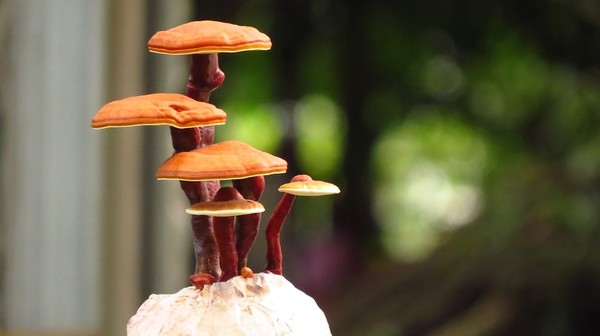
영지버섯은 살아있는 나무에서 자라는 버섯의 일종이다. 과학자들은 그것을 가노데르마(Ganoderma) 또는 가노데르마 시넨스(Ganoderma sinness)라고 부를지도 모른다. 전통 한의학에서는 이 버섯군을 영지라고 한다. 일본에서는 레이시로 알려져 있다. 중국에서는 G. whichum을 치즈, G. sinense는 지즈로 알려져 있다.
가노데르마 버섯에는 다른 종류가 많이 있는데 약용 버섯을 다른 종류와 구별하기가 어렵다.
영지버섯은 동아시아에서 아주 오랫동안 약으로 사용되어 왔다. 생명을 연장하고, 노화를 방지하며, 에너지를 증가시키는 것으로 생각되었다. 중국에서는 항암치료나 방사선치료를 받는 암환자의 면역력 강화에 활용되고 있다.
2.영지버섯의 투여 혹은 복용법은 어떠한가?
영지버섯은 보통 말려서 액체, 캡슐, 분말 형태로 추출물로 복용한다.
3.영지버섯을 이용한 실험실이나 동물 연구가 실시되었는가?
실험실 연구에서, 종양 세포는 새로운 물질을 테스트하고 그것이 항암 효과를 가질 가능성이 있는지를 알아내기 위해 사용된다. 동물 연구에서는 약물, 절차 또는 치료가 동물에게 안전하고 효과적인지 알아보기 위해 검사를 한다. 실험실과 동물 연구는 어떤 물질이 사람들에게 시험되기 전에 행해진다.
실험실 및 동물 연구는 레이시 버섯, 트리테르페노이드, 다당류의 활성 성분이 폐암을 포함한 종양에 미치는 영향을 실험했다. 레이시를 사용하여 수행한 실험실 및 동물 연구에 대한 내용은 건강 전문가 버전의 약용 버섯의 실험실/동물/사전 임상 연구 섹션을 참조하십시오.
4.영지버섯에 대한 연구가 사람에게 행해진 적이 있는가?
영지버섯으로 만든 제품을 이용한 연구는 중국과 일본에서 이루어졌다.
폐암
연구 결과에 따르면, 영지버섯으로 만든 제품을 보조 요법으로 사용하는 것이 폐암 환자의 면역 체계를 강화하는데 도움이 될 수 있다고 한다.
폐암 환자에 대한 연구는 다음과 같다.
• 중국에서 시행된 오픈라벨 실험에서 36명의 폐암 환자들에게 '가노폴리'라고 불리는 영지버섯(reisi)으로 만든 처방전 없는 제품이 주어졌다. 환자들은 다른 보완 치료법과 함께 화학요법이나 방사선 치료를 받고 있었다. 림프구 수나 자연 킬러 세포 활동 등 연구 중인 면역 반응에 뚜렷한 변화가 있었고, 면역 반응에 변화가 없는 환자도 있었다. 대장암 환자 47명을 대상으로 한 가노폴리에 대한 비슷한 연구에서도 같은 결과가 나왔다.
• 중국에서는 12명의 폐암 환자를 대상으로 연구가 실시되었다. 그들의 혈액 검사는 영지버섯으로 만든 제품을 복용하는 것이 면역 반응 개선에 도움이 되는지 알아보기 위해 실시되었다. 이 연구는 영지버섯의 다당류가 림프구라고 불리는 암 퇴치 면역 세포가 활동하도록 도울 수 있다는 것을 발견했다.
대장암
다음의 연구는 대장암 예방을 위한 영지버섯을 살펴보았다.
• 일본에서는 양성 대장종양 환자 225명을 대상으로 연구했다. 12개월 동안 123명의 환자에게 MAK 버섯 추출물을 투여했고, 102명의 환자는 MAK로 치료를 받지 못했다. 12개월 만에 모든 환자에 대한 후속 대장내시경 검사가 실시되었다. MAK를 받은 그룹에서는 종양의 수와 크기가 줄었지만, MAK를 받지 않은 그룹에서는 그렇지 않았다. 연구원들은 MAK가 양성 대장 종양이 형성되는 것을 막는 데 도움을 줄 수 있다고 제안한다.
5.영지버섯은 미국 식품의약국(FDA)의 암 치료제 사용 승인을 받았는가?
미국 식품의약국(FDA)은 영지버섯을 암이나 그 밖의 다른 질환에 대한 치료제로 사용하는 것을 승인하지 않았다.
FDA는 건강보조식품이 안전하거나 효과적이라고 승인하지 않는다. 건강보조식품을 만드는 회사는 그들이 안전한지, 라벨에 적힌 주장이 사실인지 그리고 소비자들을 오도하지 않도록 할 책임이 있다. 보충제를 만드는 방법은 규제되지 않기 때문에 버섯 보충제의 모든 생산단위와 브랜드가 같지 않을 수 있다.
Questions and Answers About Reishi
1.What is reishi?
Reishi is a type of mushroom that grows on live trees. Scientists may call it either Ganoderma lucidum or Ganoderma sinense. In traditional Chinese medicine, this group of mushrooms is known as Ling Zhi. In Japan, they are known as Reishi. In China, G. lucidum is known as Chizhi and G. sinense is known as Zizhi.
There are many other types of Ganoderma mushrooms and it is hard to tell the medicinal mushrooms from the other types.
Reishi has been used as medicine for a very long time in East Asia. It was thought to prolong life, prevent aging, and increase energy. In China, it is being used to strengthen the immune system of cancer patients who receive chemotherapy or radiation therapy.
2.How is reishi given or taken?
Reishi is usually dried and taken as an extract in the form of a liquid, capsule, or powder.
3.Have any laboratory or animal studies been conducted using reishi?
In laboratory studies, tumor cells are used to test a new substance and find out if it is likely to have any anticancer effects. In animal studies, tests are done to see if a drug, procedure, or treatment is safe and effective in animals. Laboratory and animal studies are done before a substance is tested in people.
Laboratory and animal studies have tested the effects of the active ingredients in reishi mushrooms, triterpenoids and polysaccharides, on tumors, including lung cancer. See the Laboratory/Animal/Preclinical Studies section of the health professional version of Medicinal Mushrooms for information on laboratory and animal studies done using reishi.
4.Have any studies of reishi mushrooms been done in people?
Studies using products made from reishi have been done in China and Japan.
Lung cancer
Studies suggest that the use of products made from reishi as adjuvant therapy may help strengthen the immune system in patients with lung cancer.
Studies in patients with lung cancer include the following:
• In an open-label trial done in China, 36 patients with advanced lung cancer were given an over-the-counter product made from reishi called Ganopoly. The patients were being treated with chemotherapy or radiation therapy, along with other complementary therapies. Some patients had marked changes in the immune responses being studied, such as lymphocyte count and natural killer cell activity, and some patients had no change in immune response. A similar study of Ganopoly in 47 patients with colorectal cancer showed the same results.
• In China, a study was done with 12 lung cancer patients. Their blood was tested to see if taking a product made from reishi could help improve immune response. The study found that the polysaccharides in reishi mushrooms may help cancer-fighting immune cells, called lymphocytes, stay active.
Colorectal cancer
The following study looked at reishi for the prevention of colorectal cancer:
• In Japan, 225 patients with benign colorectal tumors were studied. For 12 months, 123 of the patients were given an extract of the mushroom G. lucidum mycelia (MAK), while 102 patients did not receive treatment with MAK. At 12 months, a follow-up colonoscopy was done on all the patients. The number and the size of the tumors decreased in the group that received MAK, but not in the group that did not receive MAK. The researchers suggest that MAK may help stop benign colorectal tumors from forming.
5.Is reishi approved by the U.S. Food and Drug Administration (FDA) for use as a cancer treatment in the United States?
The U.S. Food and Drug Administration (FDA) has not approved the use of reishi as a treatment for cancer or any other medical condition.
The FDA does not approve dietary supplements as safe or effective. The company that makes the dietary supplements is responsible for making sure they are safe and that the claims on the label are true and do not mislead the consumer. The way that supplements are made is not regulated, so all batches and brands of mushroom supplements may not be the same.
암스쿨에 게재된 기사는 미국국립암연구소(NCI), 미국암협회(ACS), 국립암센터(NCC), 일본국립암연구소(NCCJ), 엠디앤더슨암센터(MD Anderson Cancer Center) 등 검증된 기관의 검증된 자료를 토대로 작성되었습니다.
이 글은 2020년 8월 작성 시점의 정보입니다. 치료 기준·급여 정보는 바뀌었을 수 있으니, 진료와 치료 결정은 반드시 담당 의료진과 상의하세요.