AI 이중 스테인 검사법은 자궁경부암 검사의 정확성과 효율성을 향상시켰다
2020.06.29 · 전영조 전문위원
AI 이중 스테인 검사법은 자궁경부암 검사의 정확성과 효율성을 향상시켰다
새로운 연구에서 컴퓨터 알고리즘은 1차 인간유두종바이러스(HPV) 검진으로 양성반응을 보이는 여성의 추적검사의 현재 기준인 Pap 도말검사에 비해 자궁경부암 검사의 정확도와 효율을 향상시켰다. 새로운 검사의 접근방식은 인공지능(AI)을 사용하여 이중 Stain 평가를 자동화하고 임상 진료에 대한 명확한 영향을 미치고 있다.
이번 연구결과는 2020년 6월 25일 국립암연구소 학술지에 발표되었다. 이 알고리즘은 다른 여러 기관의 연구자들과 협력하여 국립 보건원의 소속인 국립 암 연구소(NCI)의 조사자들에 의해 개발되었고 연구가 수행되었다.
연구를 이끈 NCI 암 역학 및 유전학 부서의 니콜라스 웬젠센 박사는 "우리의 연구에서 표준 검진방법을 능가하는 HPV검사 양성의 후속 조치로 자궁경부암 검사에 완전히 자동화된 검서법을 발견했다는 것을 보여줄 수 있어 흥분된다."고 말했다. 우리 연구결과를 바탕으로 전 암 상태를 더 많이 찾아내고 위(거짓)양성을 줄임으로써 자궁경부암 검사의 효율성을 높일 수 있어 HPV검사 양성 여성들 사이에서 불필요한 시술을 상당 부분 없앨 수 있는 가능성이 있다.
최근 몇 년 동안 임상 의사들은 자궁경부암 검진을 개선하기 위해 디지털 화상과 기계 학습의 진전을 이용하기를 희망해 왔다. HPV 음성 반응의 여성은 향후 10년 동안 자궁경부암에 걸릴 위험이 낮고, 심지어 HPV검사 양성을 유발하는 대부분의 자궁경부 HPV 감염은 암 전 상태로 이어지지 않을 것이다. 과제는 HPV 양성반응을 보인 여성이 자궁경부에 전 암 상태의 변화를 일으킬 가능성이 가장 높기 때문에, 대장내시경 검사를 통해 자궁경부를 검사하고 조직검사를 위해 샘플을 채취해야 하거나 즉각적인 치료가 필요한 여성을 파악하는 것이다.
현재, HPV검사 양성 판정을 받은 여성들은 대장내시경 검사와 조직검사 또는 치료의 필요성을 평가하기 위해 추가적인 HPV 검사나 Pap 도말 검사를 받을 수 있다. 특수 훈련을 받은 실험실 전문가(세포검사기사)가 얼룩진 슬라이드를 분석해 비정상적인 세포를 찾는 'Pap 세포학'은 암으로 진행되기 전에 암 전 상태를 찾는 데 사용된다. 그러나 이러한 접근법은 이상적이지 않다. 예를 들어, Pap 도말검사는 시간이 많이 걸리고, 매우 민감하지 않으며, 위(거짓)양성 소견이 나오기 쉽다.
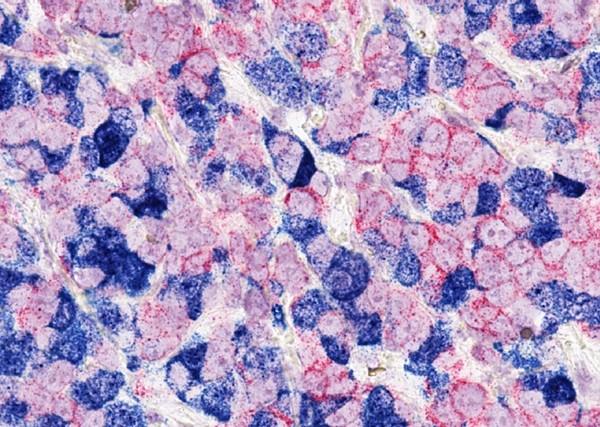
이중 스테인 검사는 HPV 양성 반응이 있는 여성이 자궁경부 변화를 일으킬 가능성을 보다 정확하게 예측할 수 있는 방법으로 등장했다. 이 테스트는 자궁경부 샘플에서 p16과 Ki-67이라는 두 단백질의 존재를 측정한다. 이전의 두 연구에서, 웬젠슨 박사와 그의 동료들은 이중 스테인 검사에서 음성 결과가 나온 여성들은 향후 5년 안에 자궁경부암에 걸릴 위험이 낮으며, Pap 도말검사에 비해 이중 스테인에 양성 반응을 보이는 여성이 더 적다는 것을 발견했다. 2020년 3월 미국 식품의약국(FDA)에서 1차 HPV 검사에서 양성 반응을 받은 여성을 대상으로 수동 이중 Stain 세포학적 검사를 승인했다.
수동 이중 stain 시험은 세포검사 기술자가 결과를 알아내기 위해 슬라이드를 보아야 한다는 점에서 주관적인 요소가 있다. 새로운 연구에서 조사자들은 완전히 자동화된 이중 stain 테스트가 수동 접근법의 성능과 일치하거나 이를 초과할 수 있는지 여부를 확인하고자 했다. 하이델베르크 대학과 연계된 스타인베이스 의료시스템 생물학 전수센터의 닐스 그라베 박사, 베른드 라르만 박사 등과 협력하여 기사에게 심층학습 교육을 시켜 놓으면 자궁경부세포가 p16과 ki-67로 얼룩졌는지 판단할 수 있는 전 슬라이드 영상 플랫폼을 개발했다. 그들은 이 방법을 카이저 퍼머넌트 캘리포니아 북부대학과 오클라호마 대학에서 HPV 자궁경부 양성 및 항문의 전 암의 세 가지 역학 연구 중 하나에 참여한 총 4,253명의 샘플에서 기존의 Pap cytology와 수동 이중 Stain 테스트 모두와 비교했다.
연구진은 AI 기반 이중 스테인 테스트가 Pap cytology와 수동 이중 스테인 모두에 비해 양성 테스트 비율이 낮았으며, Pap cytology보다 민감성(전 암 상태를 정확하게 식별할 수 있는 능력)와 상당히 높은 특이성(전 암 상태가 아닌 것을 정확하게 식별할 수 있는 능력)을 보였다. AI 기반 이중 스테인(dual stain)은 Pap(약 42% 대 60%)에 비해 대장내시경 진료 의뢰를 약 3분의 1로 줄였다. 검사법도 탄탄해 항문 세포학에서 비견할 만한 성과를 보였다.
요컨대, 자동화된 테스트는 현행 기준인 Pap cytology의 성능을 능가하여 거짓 양성 결과의 수를 줄이고 불필요한 대장내시경 시술에 대한 의뢰를 실질적으로 줄였다. 그 결과는 또한 항문암 검진을 위한 선택사항으로서 검사에 대한 추가 평가를 뒷받침한다.
연구자들은 그들의 접근방식이 명확한 임상적 응용을 가지고 있으며, 클라우드 기반 구현을 통해 전 세계적으로 접근 가능할 것이라는 점에 주목한다. 플랫폼의 다른 애플리케이션에는 보조 평가, 제2의 의견 및 품질 관리가 포함된다.
수동 이중 스테인 검사는 최근에서야 FDA의 HPV 양성 테스트 결과가 나온 여성 검진 승인을 받았기 때문에 이제 막 사용이 시작되고 있다. 완전 자동화된 이중 스테인 테스트로 HPV 양성 여성의 검진을 허용하려면 추가적인 규제 승인이 필요하다. 연구진은 이들의 연구 결과가 디지털 병리학과 심층 학습을 임상 실습에 도입하는 중요한 사례로 작용하고 있으며, 이들의 접근방식은 자궁경부암 검진을 실질적으로 개선할 수 있는 잠재력을 갖고 있어 매년 HPV 양성 반응을 보이는 수백만 명의 여성들에게 영향을 미친다고 말한다.
게시물 : 2020년 6월 25일
AI dual-stain approach improved accuracy, efficiency of cervical cancer screening in NCI study
Posted: June 25, 2020
In a new study, a computer algorithm improved the accuracy and efficiency of cervical cancer screening compared with cytology (Pap test), the current standard for follow-up of women who test positive with primary human papillomavirus (HPV) screening. The new approach uses artificial intelligence (AI) to automate dual-stain evaluation and has clear implications for clinical care.
Findings from the study were published June 25, 2020, in the Journal of the National Cancer Institute. The algorithm was developed and the study conducted by investigators at the National Cancer Institute (NCI), part of the National Institutes of Health, in collaboration with researchers from several other institutions.
“We’re excited to show we have a fully automated approach to cervical cancer screening as a follow-up to a positive HPV test that outperformed the standard method in our study,” said Nicolas Wentzensen, M.D., Ph.D., of NCI’s Division of Cancer Epidemiology and Genetics, who led the study. “Based on our results, it could increase the efficiency of cervical cancer screening by finding more precancers and reducing false positives, which has the potential to eliminate a substantial number of unnecessary procedures among HPV-positive women.”
In recent years, clinicians have hoped to take advantage of advances in digital imaging and machine learning to improve cervical cancer screening. Women who test negative for HPV are at low risk for cervical cancer for the following decade, and even most cervical HPV infections—which cause positive HPV tests—will not result in precancer. The challenge is to identify which women with positive HPV test results are most likely to have precancerous changes in their cervical cells and should, therefore, have a colposcopy to examine the cervix and take samples for biopsy, or who need immediate treatment.
Currently, women with positive HPV tests may have additional HPV tests or Pap cytology tests to assess the need for colposcopy, biopsy, or treatment. Pap cytology, in which specially trained laboratory professionals (cytotechnologists) analyze stained slides to look for abnormal cells, is used to find precancers before they progress to cancer. But these approaches are not ideal. For example, Pap cytology tests are time consuming, not very sensitive, and prone to false-positive findings.
Dual-stain testing has emerged as a way to more accurately predict the chance that a woman with a positive HPV test has precancerous cervical changes. The test measures the presence of two proteins, p16 and Ki-67, in cervical samples. In two previous studies, Dr. Wentzensen and his colleagues found that women who had a negative result on a dual-stain test had a low risk of developing cervical precancer in the following five years and that fewer women test positive for dual-stain compared to Pap cytology. In March 2020, the manual dual-stain cytology test was approved by the U.S. Food and Drug Administration (FDA) for women who have received a positive result on a primary HPV screening.
The manual dual-stain test has a subjective component, in that a cytotechnologist must look at the slide to determine the results. In the new study, the investigators wanted to see if a fully automated dual-stain test could match or exceed the performance of the manual approach. In collaboration with Niels Grabe, Ph.D., and Bernd Lahrmann, Ph.D., of the Steinbeis Transfer Center for Medical Systems Biology, which is associated with the University of Heidelberg, they developed a whole-slide imaging platform that, after being trained with deep learning, could determine if any cervical cells were stained for both p16 and Ki-67. They compared this method with both conventional Pap cytology and manual dual-stain testing in samples from a total of 4,253 people participating in one of three epidemiological studies of HPV-positive cervical and anal precancers at Kaiser Permanente Northern California and the University of Oklahoma.
The researchers found that the AI-based dual-stain test had a lower rate of positive tests than both Pap cytology and manual dual-stain, with better sensitivity (the ability to correctly identify precancers) and substantially higher specificity (the ability to correctly identify those without precancers) than Pap cytology. AI-based dual-stain reduced referral to colposcopy by about a third compared with Pap (approximately 42% vs. 60%). The testing method was also robust, showing comparable performance in anal cytology.
In short, the automated test surpassed the performance of the current standard, Pap cytology, reducing the number of false positive results and substantially reducing referral to unnecessary colposcopy procedures. The results also support further evaluation of the test as an option for anal cancer screening. The researchers note that their approach has clear clinical application, and through cloud-based implementation, it would be globally accessible. Other applications of the platform include assisted evaluation, second opinion, and quality control.
Because the manual dual-stain test has only recently received FDA approval for screening of women who have HPV-positive test results, its use is just getting started. Additional regulatory approval will be needed to allow for screening of HPV-positive women with a fully automated dual-stain test. The researchers say that their findings serve as an important example for introducing digital pathology and deep learning into clinical practice, and their approach has the potential to substantially improve cervical cancer screening, affecting millions of women testing HPV-positive each year.
이 글은 2020년 6월 작성 시점의 정보입니다. 치료 기준·급여 정보는 바뀌었을 수 있으니, 진료와 치료 결정은 반드시 담당 의료진과 상의하세요.